top of page





Founded in 2012, the Urban Law Center at Fordham Law School seeks to investigate and improve the role of the law and legal systems in contemporary urbanism. It promotes an interdisciplinary understanding of the legal, governance, and regulatory aspects of urban environments by advancing collaborative research and scholarship, organizing local and global convenings, and supporting knowledge sharing, career pathways and pedagogy in the world of urban law. In particular, the Center’s efforts focus on forces that shape urban inequality and urban innovation, targeting the most pressing issues facing our nation’s cities and their metropolitan regions.
URBAN LAW BULLETIN


Sep 1, 2020


Aug 18, 2020


Aug 4, 2020


Jul 21, 2020


Jul 7, 2020


Jun 2, 2020


May 18, 2020


Apr 28, 2020


Mar 10, 2020


Feb 18, 2020


Jan 28, 2020


Dec 17, 2019


Nov 25, 2019
State and Local Government Law Blog
Statutory Interpretation


The Fifty States' Varied Laws on Prosecutorial Nonenforcement
Prosecutorial discretion has become a political battleground in state and local government. Among other initiatives, reform prosecutors in cities like San Francisco (where I teach) have claimed authority to categorically suspend enforcement of certain criminal laws on social-justice grounds. The San Francisco district attorney, for example, campaigned on declining prosecution of certain “quality of life” crimes. Similarly, just this this month, the newly elected Manhattan

Zachary Price
Jan 27, 20225 min read


Calibrating Environmental Review to the Scope of Municipal Discretion Under the HAA
This is the last in a four part series. SLoGLaw thanks Chris Elmendorf and Tim Duncheon for this timely treatment of the important issue of affordable housing for California, and urban regions around the country--Ed. The California Environmental Quality Act (CEQA) requires state and local agencies that have discretion to choose among possible options to study environmental effects before making their choice. In theory, this leads to better agency decisions. (A contestable cla
Christopher S. Elmendorf & Tim Duncheon
Dec 2, 202111 min read
Does the HAA (or anything else) Provide a Remedy CEQA-Laundered Project Denials?
Here is Part 3 or this four-part series: The HAA prevents cities from denying or reducing the density of housing projects, but it doesn’t exempt projects from environmental review under CEQA. CEQA spells out time limits for the completion of environmental reviews, but as yesterday’s post explained, those limits have proven illusory in court. So if a city wants to deny a project that the HAA protects, what’s to keep the city from laundering the denial, as it were, through CEQ
Christopher S. Elmendorf & Tim Duncheon
Dec 1, 202116 min read


How CEQA and the HAA Became “Super”
In yesterday’s post , we asserted that the recent denial of a downtown housing project in San Francisco portends a generational clash of super-statutes, with the California Environmental Quality Act (CEQA) facing off against the state’s Housing Accountability Act (HAA). In subsequent posts, we will explore the particulars of the CEQA-HAA conflict, as illustrated by the saga of the San Francisco project. Today, however, our goal is simply to show that CEQA and the HAA both hav
Christopher S. Elmendorf & Tim Duncheon
Nov 30, 20219 min read


Canonizing Local Governments
This last July, the Michigan Supreme Court dusted off an obscure canon of statutory construction to resolve a high-profile case involving the City of Detroit’s efforts to revise its charter. The canon, codified by Article 7, section 34 of the Michigan Constitution , calls for the powers of local governments to be “liberally construed.” In theory, such a canon, which is contained in several other state constitutions or statutory home-rule grants (for instance, those of Kansa

Roderick M. Hills
Nov 24, 20215 min read


Calibrating Judicial Review to the Times
Judge Sutton’s two books, Fifty-One Imperfect Solutions and Who Decides? contain fascinating history lessons, much food for thought, and some practical advice. One intriguing suggestion, especially prominent in his first book, is that state courts decide questions of state constitutional law first, reaching federal constitutional questions only if necessary. As readers of this blog undoubtedly know, when it comes to constitutional rights, the federal Constitution sets a flo
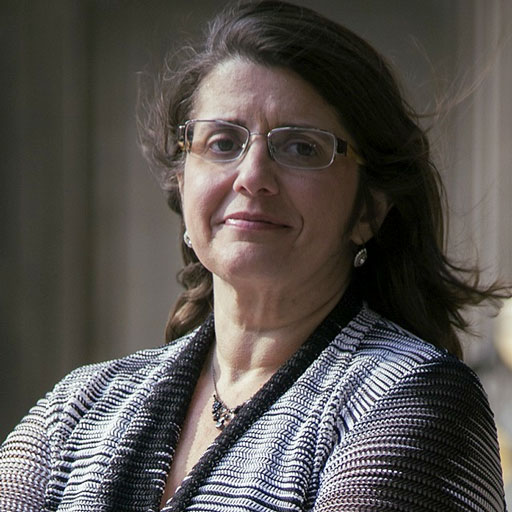
Carolyn Shapiro
Oct 21, 20215 min read


50 Decisionmakers, Explained
Judge Sutton’s Who Decides? is a gracefully written, good-natured, and open-minded book about the acceptance of pluralism in governmental processes. The book covers a broad swathe of questions concerning institutional design — legislative districts, agency powers, plural executives, selection of judges, local governments’ autonomy, among other topics. Uniting these disparate topics is the gently implicit argument that designing institutions is difficult, and reasonable peopl
Roderick M. Hills
Oct 20, 20216 min read
bottom of page